Lafayette guest house planning focus
Guest house-style ADUs need privacy, access, utilities, drainage, storage, and daily-use comfort planned early.
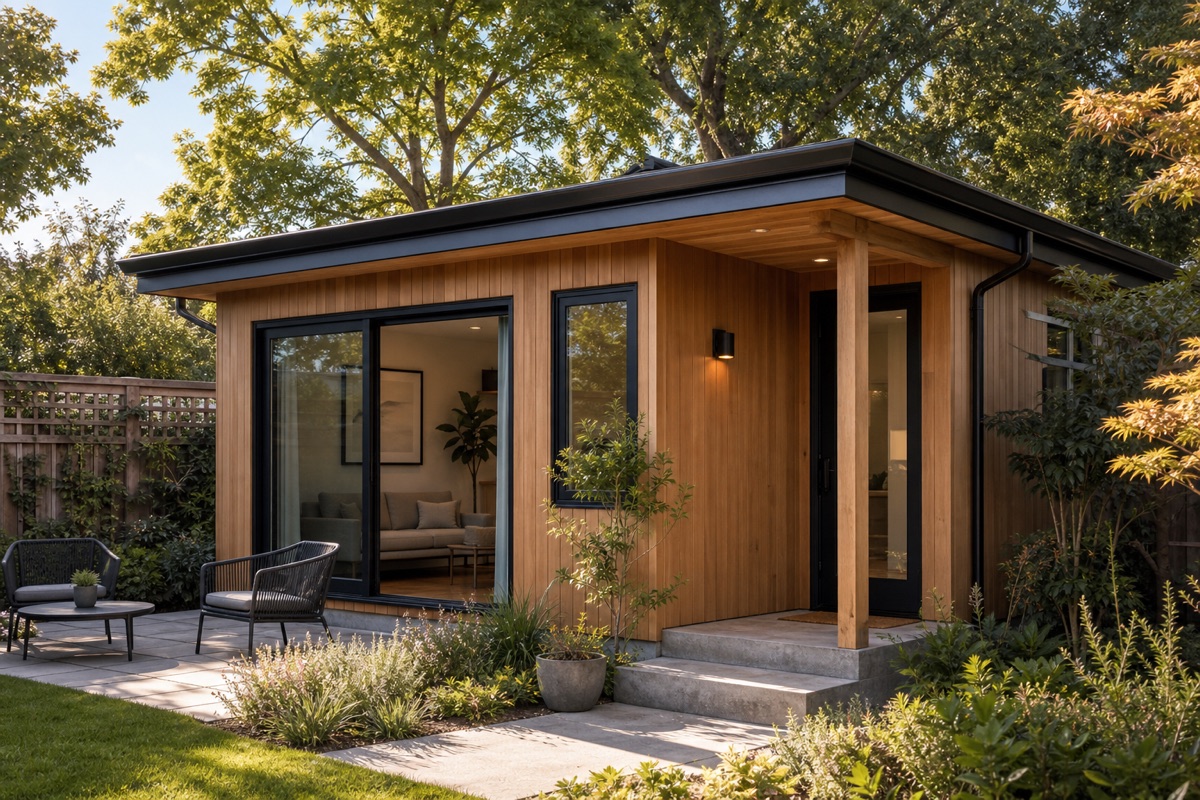
Illustrative planning profile · not a completed Terra Buildr project
Lafayette · ADU Builder
A Lafayette guest house profile focused on private family flexibility, detached ADU planning, utility coordination, landscape connection, and refined small-space living.
Planning overview
A guest house or ADU should feel independent without feeling disconnected from the property. Entry, privacy, window placement, outdoor space, lighting, and landscape relationship shape how comfortable the unit feels.
Lafayette properties often have strong yard potential, but drainage, access, tree locations, slope, and utility routing can affect the right placement. These details should be reviewed before layout and finishes are fixed.
Terra Buildr helps homeowners compare whether the right path is a detached ADU, attached ADU, guest suite, addition, or full remodel. That comparison keeps the project focused on the real household need.
Guest house-style ADUs need privacy, access, utilities, drainage, storage, and daily-use comfort planned early.
The plan should reflect whether the space is for guests, family, work, rental flexibility, or future household needs.
Window placement, entry orientation, lighting, and landscape screening shape comfort.
Electrical, water, sewer, drainage, and equipment locations can change the best layout.
Scope map
This is an orientation checklist, not a proposal. Confirmed drawings, existing conditions, consultant input, selections, and site logistics determine actual scope.
Detached guest house or ADU planning
Privacy, entry, and outdoor connection review
Utility routing, drainage, and equipment coordination
Kitchenette, bathroom, storage, and lighting planning
Exterior materials, patio connection, and closeout details
Property + construction challenge
A useful profile makes uncertainty visible before it becomes field pressure.
Guest house projects can become strained when the unit is planned as an object instead of part of the whole property.
Utility routing, drainage, privacy, outdoor movement, lighting, and material staging can all shape the real construction path.
A compact living space also needs discipline. Storage, bath layout, kitchenette scale, window placement, acoustics, and exterior access should be coordinated before finishes are ordered.
Planning decisions
Each decision connects the intended experience to practical design and construction constraints.
Planning sequence
Stage names are illustrative. Actual services, roles, timing, and deliverables depend on project fit and an agreed scope.
Clarify intended use, independence, privacy, access, utilities, and property constraints.
Compare guest house, detached ADU, attached ADU, conversion, addition, or remodel paths.
Coordinate drawings, selections, utility assumptions, material readiness, staging, and protection.
Manage access, site work, utilities, framing, envelope, rough trades, finishes, cleanup, and inspections.
Review fixtures, storage, lighting, exterior details, cleaning, and daily-use comfort.
Avoidable pressure
Placement controls privacy, access, outdoor space, utilities, and how construction will be staged.
Trenching, equipment placement, water, sewer, and electrical assumptions can reshape the project.
Guests or family need storage, lighting, bath comfort, acoustic separation, and a clear entry sequence.
Continue planning
Explore service and city pages with established scope guidance, then bring the actual property into the conversation.
Planning profile questions
Yes. Terra Buildr helps Lafayette homeowners plan guest house-style ADUs, detached ADUs, attached ADUs, and flexible private living spaces.
Use, privacy, access, utility routing, drainage, site protection, storage, bathroom comfort, and outdoor connection should be reviewed early.
Yes. Sometimes independent space is right. Other times a connected addition or remodel better solves the homeowner need.
Design status, utility work, access, inspections, material lead times, finish decisions, and construction sequencing can all affect timing.
Start with a project conversation focused on the property, intended use, privacy needs, likely scope, and timing goals.
Planning something related?
Share the location, current stage, desired outcome, available documents, and the questions this profile helped surface.