Berkeley addition planning focus
Older-home conditions, structure, rooflines, and indoor-outdoor flow should be understood before the scope is priced.
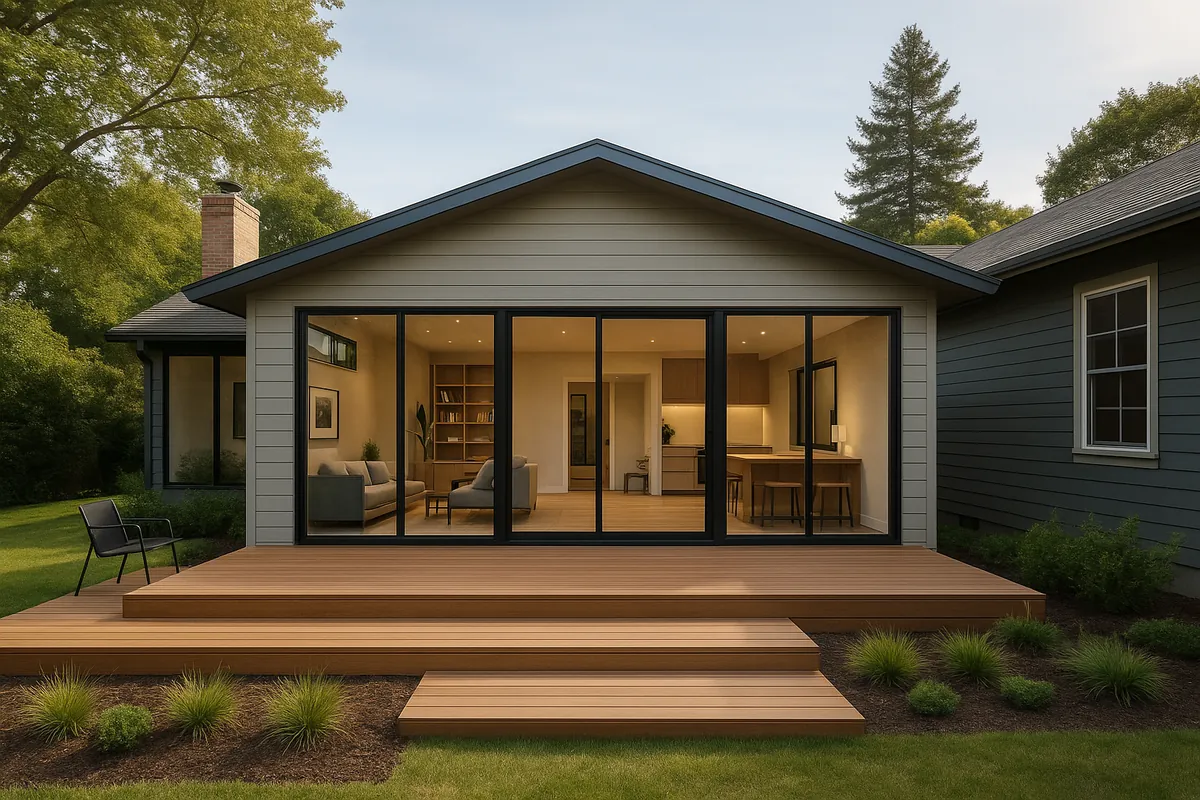
Illustrative planning profile · not a completed Terra Buildr project
Berkeley · Home Additions
A Berkeley addition profile focused on expanding useful living space while respecting the character, scale, and neighborhood context of an established East Bay home.
Planning overview
A strong addition should make the original home feel more complete. It should not read like a separate box attached later. That means layout, rooflines, exterior materials, window rhythm, interior transitions, flooring, lighting, and trim all need to be discussed as one construction scope.
Berkeley homes often bring the kind of conditions that reward careful planning: older framing, unique floor levels, hillside lots, mature trees, drainage concerns, and neighborhood context. These details can affect structure and sequence long before finishes are installed.
Terra Buildr helps homeowners think through what the addition must accomplish first. More square footage is only useful when it improves circulation, gathering, privacy, storage, daylight, outdoor connection, and the way the home supports daily life.
Older-home conditions, structure, rooflines, and indoor-outdoor flow should be understood before the scope is priced.
The addition should solve the actual living problem before the size, shape, or exterior expression is locked.
Foundation, framing, drainage, rooflines, and systems decide whether the addition can be built cleanly.
Exterior materials, windows, trim, flooring, and lighting should make the new work feel deliberate.
Scope map
This is an orientation checklist, not a proposal. Confirmed drawings, existing conditions, consultant input, selections, and site logistics determine actual scope.
Kitchen, family room, primary suite, or rear addition planning
Foundation, framing, and roofline tie-in review
Exterior material transition and window coordination
Interior flow, flooring, lighting, and finish continuity
Site protection and occupied-home construction planning
Property + construction challenge
A useful profile makes uncertainty visible before it becomes field pressure.
Berkeley additions often involve older structures, tighter lots, hillside or drainage considerations, neighbor proximity, and the need for new work to feel original rather than attached later.
The most successful additions start by defining the living problem. A kitchen may need better connection to the yard. A family room may need natural light and storage. A primary suite may need privacy, closet planning, and bath coordination. Each goal affects structure and sequence.
Without early coordination, homeowners may compare proposals that assume different foundation details, finish levels, window packages, flooring transitions, roof work, or site protection. That makes it hard to understand the real scope.
Planning decisions
Each decision connects the intended experience to practical design and construction constraints.
Planning sequence
Stage names are illustrative. Actual services, roles, timing, and deliverables depend on project fit and an agreed scope.
Clarify what the addition must improve and what existing conditions may influence structure, access, and scope.
Review foundation logic, framing, rooflines, systems, waterproofing, materials, and occupied-home needs.
Resolve windows, doors, flooring, trim, lighting, cabinets, tile, and exterior materials early enough to protect schedule.
Coordinate demolition, protection, structural work, rough trades, inspections, finishes, and closeout details.
Review transitions, finishes, cleanup, and the way the new space functions with the original home.
Avoidable pressure
More room does not automatically improve the home if circulation, storage, daylight, and privacy are not addressed.
Existing framing, foundations, floor levels, utilities, and moisture conditions can change the right construction path.
Different assumptions about structure, windows, finishes, and protection can make bids look simpler than they are.
Continue planning
Explore service and city pages with established scope guidance, then bring the actual property into the conversation.
Planning profile questions
Older structures, hillside conditions, tight lots, drainage, neighbor proximity, and architectural continuity can all influence the right scope.
Yes. An addition is right when the home truly needs more space. A full remodel may be better when the existing footprint can be reworked more effectively.
Photos, rough dimensions, a list of problems to solve, inspiration, known structural or drainage concerns, and timing goals make the first conversation more useful.
The plan should coordinate rooflines, exterior materials, windows, flooring, lighting, trim, and circulation so the new work feels intentional.
Yes. Additions often become stronger when adjacent kitchens, bathrooms, flooring transitions, lighting, and whole-home finishes are planned together.
Planning something related?
Share the location, current stage, desired outcome, available documents, and the questions this profile helped surface.