Bathroom remodel planning focus
Waterproofing, tile layout, ventilation, lighting, and fixture placement should be coordinated before demolition.
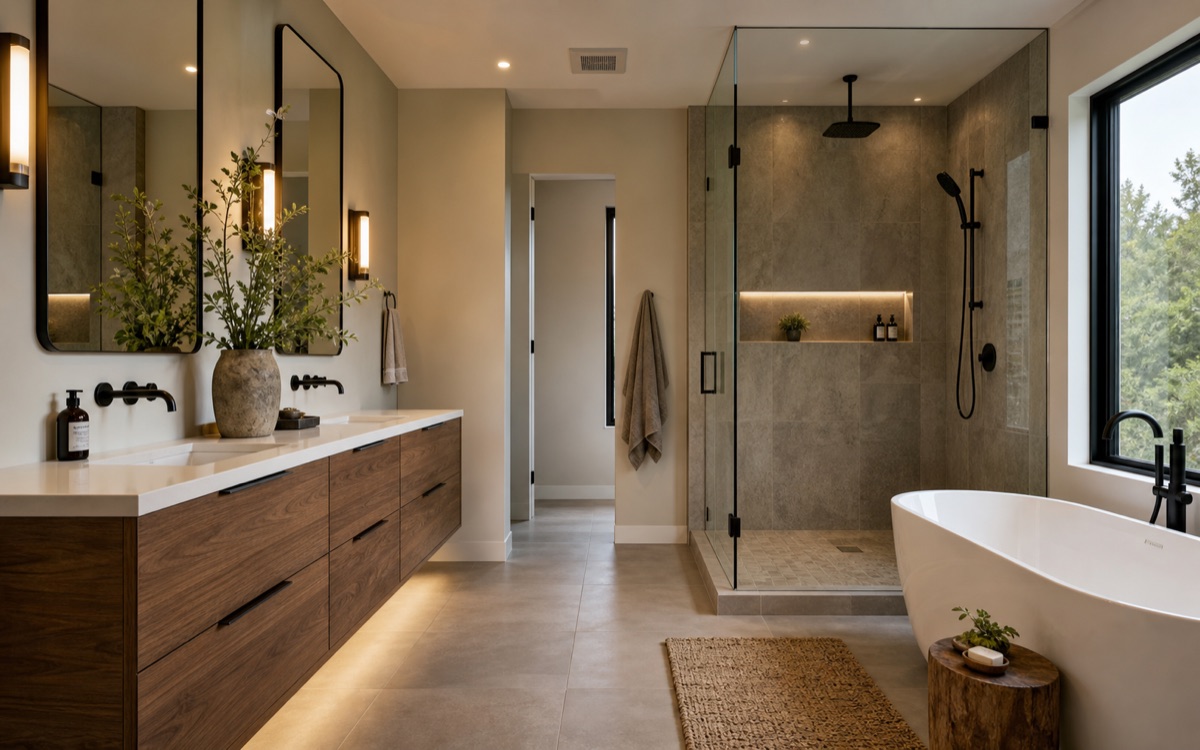
Illustrative planning profile · not a completed Terra Buildr project
San Francisco Bay Area · Bathroom Remodeling
A bathroom remodel profile focused on layout clarity, waterproofing discipline, premium tile coordination, better lighting, and a finished room that feels calmer every day.
Planning overview
Bathroom remodeling is compact, but it is not simple. A high-quality bathroom concentrates plumbing, electrical, framing, ventilation, waterproofing, tile, glass, cabinetry, fixtures, lighting, and daily usability into one small space.
The visible finishes matter, but the hidden preparation matters just as much. Shower waterproofing, wall flatness, drain placement, tile layout, niche dimensions, valve height, exhaust routing, lighting locations, vanity depth, and glass measurements all affect the final room.
Terra Buildr helps homeowners think through those decisions before the work becomes reactive. The result should feel refined, clean, and calm because the construction sequence was planned with the same care as the finish palette.
Waterproofing, tile layout, ventilation, lighting, and fixture placement should be coordinated before demolition.
A beautiful shower depends on substrate, slope, waterproofing, drain planning, niche dimensions, and careful sequencing.
Vanity lighting, recessed lighting, switch placement, fan controls, and mirror size should be coordinated together.
A bathroom feels calmer when vanity depth, medicine cabinets, shelves, niches, towels, and outlets are planned around daily use.
Scope map
This is an orientation checklist, not a proposal. Confirmed drawings, existing conditions, consultant input, selections, and site logistics determine actual scope.
Primary, guest, powder, or suite bathroom remodel planning
Shower layout, waterproofing, tile, and glass coordination
Vanity, storage, mirror, lighting, and electrical planning
Plumbing trim, ventilation, flooring, and finish sequencing
Site protection, daily cleanup, walkthrough, and closeout details
Property + construction challenge
A useful profile makes uncertainty visible before it becomes field pressure.
Bathroom remodels require many trades and decisions in a limited space. If layout, rough-in dimensions, tile layout, plumbing trim, lighting, ventilation, and glass are not coordinated early, the finished room can feel compromised even with expensive materials.
Bay Area homes also vary widely. Older framing, uneven floors, existing plumbing locations, access limits, moisture history, subfloor conditions, and occupied-home needs can all affect scope and sequence.
The most useful first conversation is not only about style. It should clarify how the room is used, what is failing, what should change, what should stay, and which hidden conditions need review before finish selections are final.
Planning decisions
Each decision connects the intended experience to practical design and construction constraints.
Planning sequence
Stage names are illustrative. Actual services, roles, timing, and deliverables depend on project fit and an agreed scope.
Discuss what is not working, who uses the bathroom, desired changes, photos, dimensions, and known moisture or plumbing concerns.
Clarify layout changes, shower details, tile, vanity, lighting, ventilation, plumbing fixtures, and likely inspection needs.
Coordinate materials, lead times, protection, demolition sequence, rough trades, waterproofing, tile schedule, and glass timing.
Manage the work with attention to cleanliness, trade sequence, hidden conditions, inspections, tile quality, and owner updates.
Review trim, caulking, hardware, glass, cleaning, ventilation, fixture operation, and closeout details before the project is considered complete.
Avoidable pressure
Tile size, niche placement, drains, valves, benches, curbs, and glass should be reviewed together before ordering.
The most important part of a shower is often the part homeowners never see after tile is installed.
A bathroom can look expensive and still feel poor if airflow, brightness, controls, and mirror lighting are not planned well.
Continue planning
Explore service and city pages with established scope guidance, then bring the actual property into the conversation.
Planning profile questions
A high-quality bathroom remodel coordinates layout, waterproofing, rough plumbing, electrical, ventilation, tile layout, lighting, glass, storage, and finish details as one scope.
Showers and wet areas depend on hidden preparation. Waterproofing, substrate, slope, drain planning, and sequencing protect the finished room over time.
Yes. Bathrooms often work best when they are coordinated with suite layout, closets, flooring transitions, lighting, and whole-home finish direction.
Photos, rough dimensions, a list of pain points, tile or fixture inspiration, leak history, and timing goals will make the first conversation more productive.
Material readiness, demolition findings, plumbing and electrical changes, inspections, waterproofing cure times, tile complexity, custom glass, cabinetry, and final trim can all affect timing.
Planning something related?
Share the location, current stage, desired outcome, available documents, and the questions this profile helped surface.