Walnut Creek addition planning focus
Additions work best when structure, rooflines, exterior materials, flooring, and outdoor flow are planned as one scope.
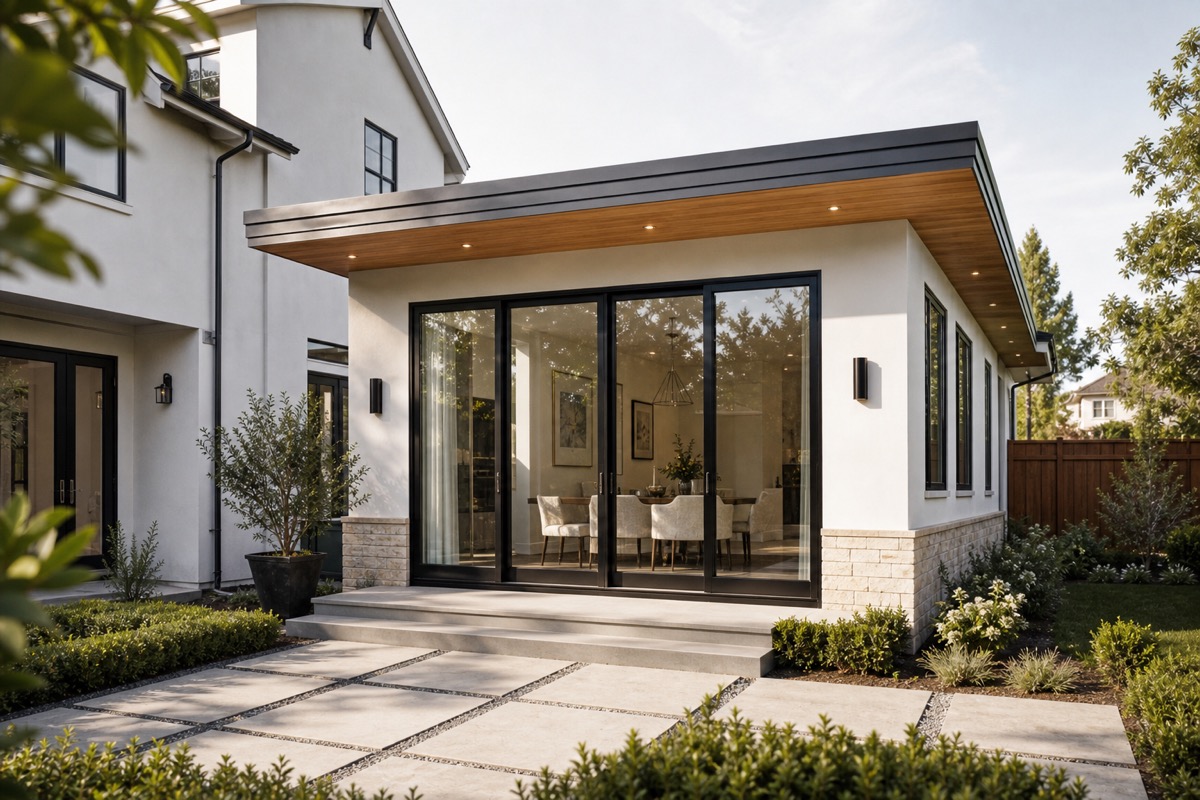
Illustrative planning profile · not a completed Terra Buildr project
Walnut Creek · Home Additions
A Walnut Creek addition profile focused on expanding family living space, improving patio connection, and making the new work feel natural to the existing home.
Planning overview
A home addition should improve the way the entire home lives. The best additions do more than add square footage: they improve circulation, gathering, daylight, storage, outdoor connection, and the relationship between old and new work.
Walnut Creek homes often have strong yards and family living opportunities. A rear addition can make the kitchen, dining, family room, and patio feel better connected when structure and finish transitions are planned early.
Terra Buildr helps homeowners clarify whether an addition, remodel, ADU, or combined scope best solves the real need. That prevents a project from becoming larger or more disruptive than it needs to be.
Additions work best when structure, rooflines, exterior materials, flooring, and outdoor flow are planned as one scope.
The addition should solve a living problem before the size is locked.
Foundations, framing, rooflines, drainage, and systems shape the build path.
Kitchen, dining, family room, patio, storage, and daylight should work together.
Scope map
This is an orientation checklist, not a proposal. Confirmed drawings, existing conditions, consultant input, selections, and site logistics determine actual scope.
Rear addition and family room planning
Kitchen or dining expansion coordination
Foundation, framing, and roofline review
Exterior material and window alignment
Flooring, lighting, trim, and patio transition planning
Property + construction challenge
A useful profile makes uncertainty visible before it becomes field pressure.
Additions can feel disconnected if the team focuses only on the new square footage. The tie-ins are often the real project.
Rooflines, foundation transitions, drainage, existing structure, exterior materials, window rhythm, flooring, and lighting all determine whether the addition feels original.
The scope should also address daily disruption, protection, access, material staging, and how the home will function during construction.
Planning decisions
Each decision connects the intended experience to practical design and construction constraints.
Planning sequence
Stage names are illustrative. Actual services, roles, timing, and deliverables depend on project fit and an agreed scope.
Clarify why more space is needed and what existing conditions may affect scope.
Review structure, rooflines, systems, openings, finishes, and outdoor connection.
Resolve key materials, trade sequencing, protection, and long-lead decisions.
Coordinate demolition, tie-ins, rough trades, inspections, finishes, and daily communication.
Review transitions, cleanup, trim, hardware, lighting, and the way the new space functions.
Avoidable pressure
More room is not enough if circulation, daylight, storage, and outdoor connection remain weak.
The addition should look intentional from outside and feel natural inside.
Construction in an occupied home needs access, dust control, staging, and cleanup expectations.
Continue planning
Explore service and city pages with established scope guidance, then bring the actual property into the conversation.
Planning profile questions
Yes. Terra Buildr helps Walnut Creek homeowners plan additions, expansions, and related remodel work with careful scope and sequencing.
Structure, rooflines, foundation tie-ins, drainage, systems, exterior materials, interior transitions, and site protection should be reviewed early.
Yes. Many rear additions include kitchen, dining, family room, flooring, lighting, and patio coordination.
Exterior proportions, windows, rooflines, flooring, trim, lighting, and finish continuity should be planned together.
Start with a project conversation focused on the home, desired space, property constraints, timing, and likely construction scope.
Planning something related?
Share the location, current stage, desired outcome, available documents, and the questions this profile helped surface.