Menlo Park bathroom planning focus
Shower function, waterproofing, tile layout, lighting, vanity storage, ventilation, and glass details should be coordinated early.
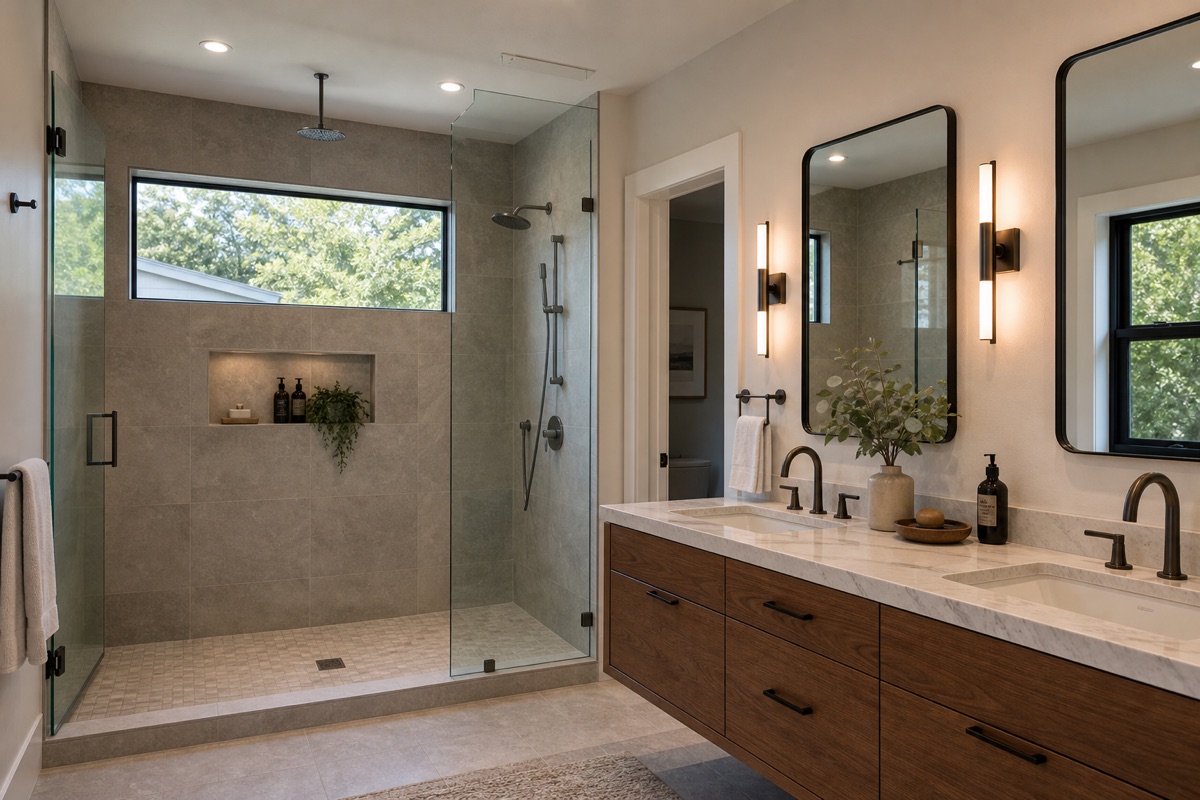
Illustrative planning profile · not a completed Terra Buildr project
Menlo Park · Bathroom Remodeling
A Menlo Park bathroom profile focused on a functional shower, high-end tile, warm vanity storage, waterproofing discipline, lighting, and clean closeout details.
Planning overview
A bathroom remodel is small in size but dense in construction decisions. Waterproofing, tile layout, rough plumbing, electrical, lighting, ventilation, vanity storage, glass, and finish sequencing all need to fit inside one room.
Menlo Park homes often carry high finish expectations and tight existing conditions. The strongest bathroom plan starts with daily use: who uses the room, what storage is missing, what feels cramped, and how the shower should actually function.
Terra Buildr helps homeowners clarify the hidden work before selecting finishes. The goal is a bathroom that feels calm, durable, and buildable rather than a beautiful image that creates field problems.
Shower function, waterproofing, tile layout, lighting, vanity storage, ventilation, and glass details should be coordinated early.
Substrate prep, slope, drain placement, waterproofing, and cure timing protect the finished shower.
Door swing, panel size, curb details, tile thickness, and wall plumbness should be anticipated early.
Vanity lights, recessed lights, switches, dimming, and mirror size should work together.
Scope map
This is an orientation checklist, not a proposal. Confirmed drawings, existing conditions, consultant input, selections, and site logistics determine actual scope.
Bathroom layout and daily-use review
Shower waterproofing, tile, drain, glass, and niche coordination
Vanity, mirror, lighting, ventilation, and outlet planning
Plumbing trim, flooring, hardware, and finish sequencing
Protection, cleanup, punch work, and final walkthrough
Property + construction challenge
A useful profile makes uncertainty visible before it becomes field pressure.
The shower is often the most technical part of the room. Drain placement, slope, substrate, waterproofing, tile size, glass, controls, and clearances should be planned together.
A bathroom can look expensive and still perform poorly if lighting, storage, ventilation, or fixture placement is not practical.
Older conditions, uneven surfaces, moisture history, plumbing locations, and material lead times can all affect the schedule and the final details.
Planning decisions
Each decision connects the intended experience to practical design and construction constraints.
Planning sequence
Stage names are illustrative. Actual services, roles, timing, and deliverables depend on project fit and an agreed scope.
Discuss use, pain points, photos, dimensions, moisture history, style direction, and timing goals.
Coordinate layout, waterproofing, tile, fixtures, glass, lighting, vanity, ventilation, and protection.
Confirm material readiness, rough trade sequence, inspections, tile timing, and glass timing.
Manage demolition, rough-in, waterproofing, tile, trim, glass, cleanup, and communication.
Review shower operation, glass alignment, caulking, hardware, ventilation, lighting, and final cleaning.
Avoidable pressure
Tile size, drain placement, niches, valves, glass, and curb details should be reviewed together.
Moisture control affects comfort, durability, and long-term bathroom performance.
A shower door or panel must work physically with the room, tile, curb, and hardware.
Continue planning
Explore service and city pages with established scope guidance, then bring the actual property into the conversation.
Planning profile questions
Yes. Terra Buildr helps Menlo Park homeowners plan primary bathrooms, guest bathrooms, powder rooms, and bathrooms inside larger remodels.
Layout, waterproofing, plumbing, electrical, ventilation, tile, glass, vanity storage, lighting, and material readiness should be reviewed early.
Yes. Custom showers should be planned around waterproofing, slope, drain placement, controls, glass, niche dimensions, and tile layout.
Material readiness, demolition findings, rough trades, inspections, waterproofing, tile complexity, glass, cabinetry, and final trim can all affect timing.
Start with photos, pain points, desired scope, timing, and a conversation about what needs to be reviewed before construction.
Planning something related?
Share the location, current stage, desired outcome, available documents, and the questions this profile helped surface.