Hillsborough ADU planning focus
Detached living space should account for slope, drainage, privacy, access, utility routing, and landscape relationship.
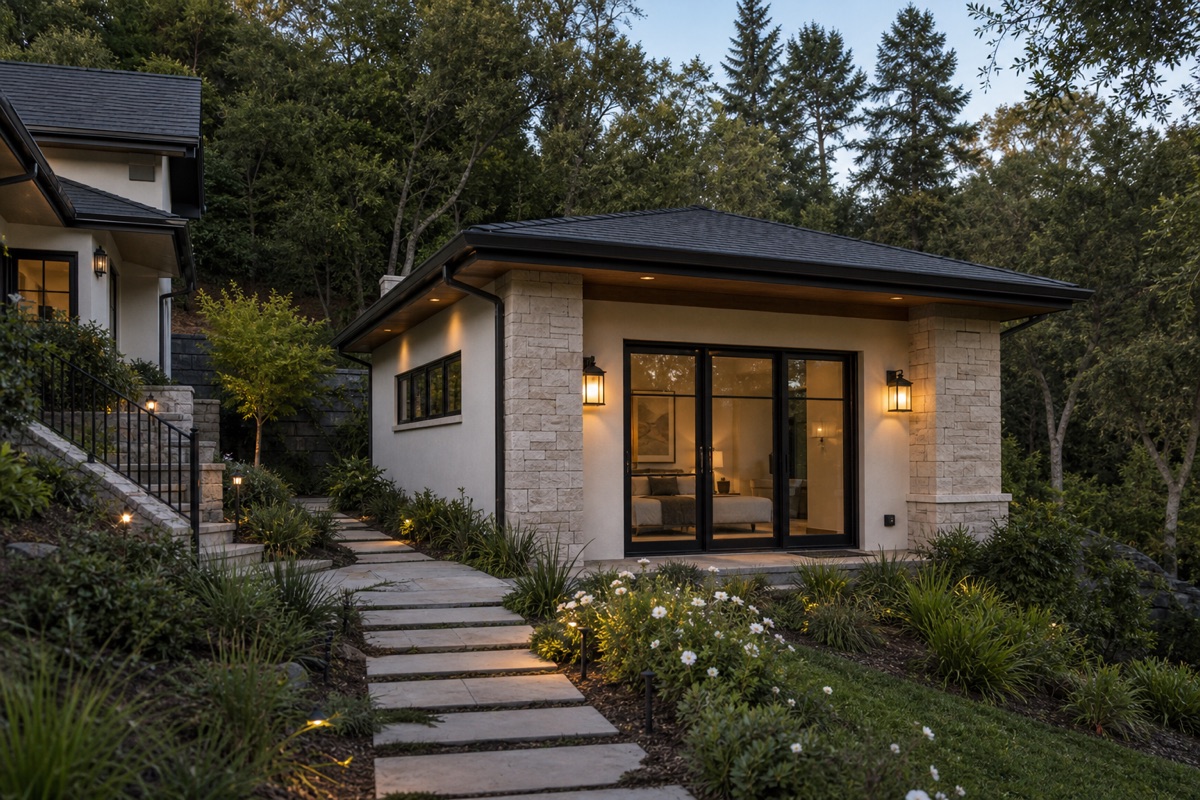
Illustrative planning profile · not a completed Terra Buildr project
Hillsborough · ADU Builder
A Hillsborough ADU profile focused on refined detached living, slope-aware placement, privacy, drainage, long-driveway logistics, and durable finish coordination.
Planning overview
A Hillsborough ADU should feel carefully placed, not squeezed into the property. Slope, driveway access, drainage, privacy, existing landscaping, and utility routes can shape the best construction path.
The unit itself must work as a complete small residence. Entry, windows, bathroom layout, storage, kitchenette planning, lighting, acoustics, and exterior materials all matter because compact spaces reveal every shortcut.
Terra Buildr helps homeowners think through the property before narrowing the design. The goal is an ADU or guest suite that supports long-term use while respecting the main home and the site.
Detached living space should account for slope, drainage, privacy, access, utility routing, and landscape relationship.
Slope, access, drainage, and utilities should guide the unit placement before design details harden.
Window placement and exterior lighting should protect both the ADU and the main residence.
Water movement, grading, thresholds, and exterior materials affect long-term quality.
Scope map
This is an orientation checklist, not a proposal. Confirmed drawings, existing conditions, consultant input, selections, and site logistics determine actual scope.
Detached ADU or guest suite feasibility review
Slope, drainage, and access planning
Privacy, windows, entry, and outdoor relationship
Utility routing, equipment, and site protection
Compact interior and exterior finish coordination
Property + construction challenge
A useful profile makes uncertainty visible before it becomes field pressure.
Hillsborough ADUs often involve long driveways, sloped terrain, mature landscape, privacy expectations, and careful material choices.
The site can influence the project as much as the floor plan. Drainage, retaining conditions, utility routes, and staging need to be understood early.
A refined ADU also needs interior discipline. Storage, bath comfort, light, ventilation, and kitchen scale should be planned around actual daily use.
Planning decisions
Each decision connects the intended experience to practical design and construction constraints.
Planning sequence
Stage names are illustrative. Actual services, roles, timing, and deliverables depend on project fit and an agreed scope.
Discuss intended use, possible locations, access, slope, privacy, utilities, drainage, and existing constraints.
Compare detached, attached, guest suite, or broader remodel options with construction realities in view.
Align drawings, materials, utilities, staging, protection, and long-lead decisions.
Manage access, site work, utilities, framing, envelope, rough trades, finishes, inspections, and cleanup.
Review exterior details, fixtures, lighting, storage, cleanup, and daily-use readiness.
Avoidable pressure
Long driveways, slope, and landscape protection can shape construction sequence.
Grading, thresholds, roof drainage, and site water should be considered before finishes.
A refined ADU needs proportion, storage, and restraint more than excessive features.
Continue planning
Explore service and city pages with established scope guidance, then bring the actual property into the conversation.
Planning profile questions
Terra Buildr helps Hillsborough homeowners plan refined ADUs, guest suites, and flexible detached living spaces with attention to site and finish quality.
Slope, drainage, access, privacy, long-driveway logistics, landscaping, and premium finish expectations often need early review.
That depends on privacy, use, site conditions, utility routes, access, and how the new space should relate to the main home.
Site work, utility routing, grading, structure, inspections, materials, finishes, and access can all affect timing and investment.
Start with a project review focused on intended use, property constraints, possible placement, timing, and what information should be gathered next.
Planning something related?
Share the location, current stage, desired outcome, available documents, and the questions this profile helped surface.