Oakland second story planning focus
Vertical additions need structural review, stair strategy, roofline planning, protection, and old-to-new finish continuity.
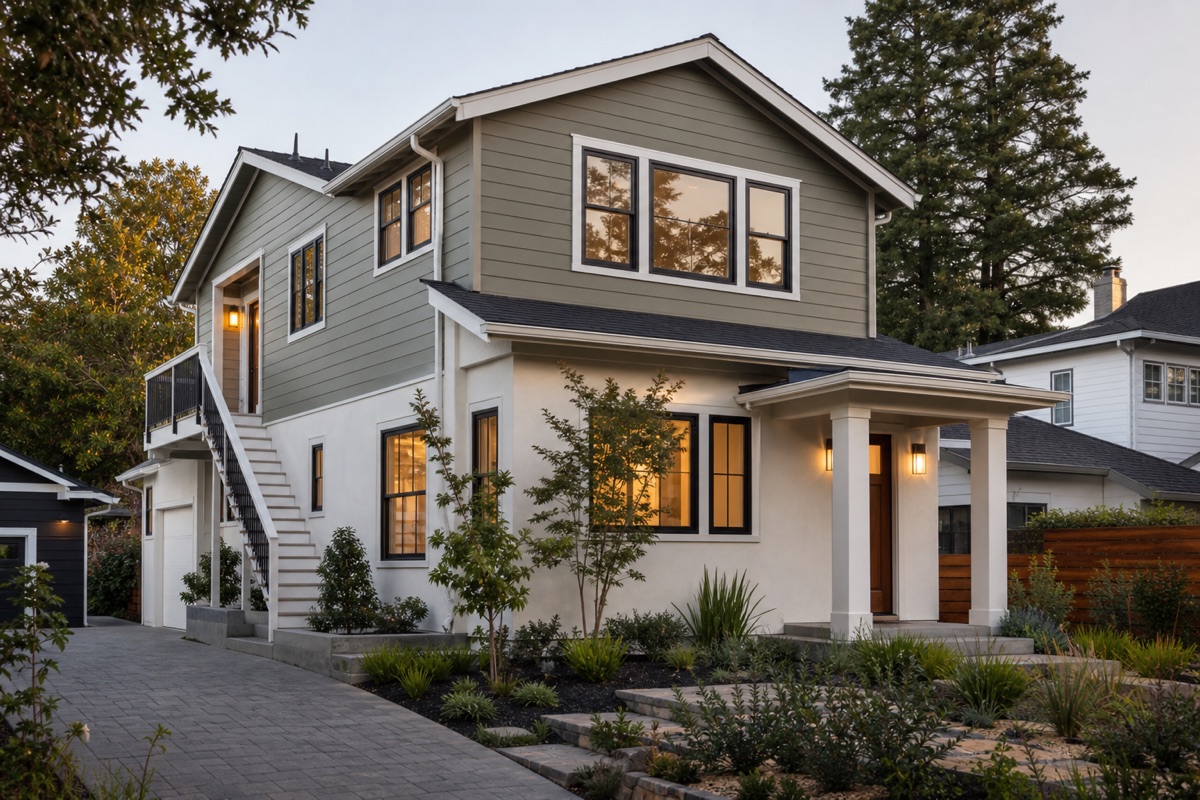
Illustrative planning profile · not a completed Terra Buildr project
Oakland · Home Additions
An Oakland addition profile focused on vertical expansion, structural planning, stair placement, hillside access, and a second story that feels integrated with the original home.
Planning overview
A second-story addition is one of the most consequential ways to expand a home. It can create bedrooms, offices, a primary suite, or flexible living space, but it also changes structure, stairs, rooflines, exterior proportions, systems, and daily disruption.
Oakland and Montclair properties often bring hillside access, older framing, neighborhood character, view considerations, and compact staging. Those details should be reviewed before the project is reduced to square footage.
Terra Buildr helps homeowners compare whether a second story, rear addition, full remodel, or ADU is the strongest path. The right answer depends on how the home should live, what the existing structure can support, and how construction can be sequenced with less stress.
Vertical additions need structural review, stair strategy, roofline planning, protection, and old-to-new finish continuity.
The existing foundation, framing, shear strategy, roofline, and load path shape what can be built cleanly.
A second story succeeds only when stair placement, circulation, privacy, and headroom work with the existing home.
Windows, siding, roofing, gutters, and proportions need to make the addition look intentional from the street and yard.
Scope map
This is an orientation checklist, not a proposal. Confirmed drawings, existing conditions, consultant input, selections, and site logistics determine actual scope.
Second-story addition and structural planning
Stair location and circulation review
Roofline, siding, window, and exterior transition coordination
Systems, lighting, flooring, trim, and finish continuity
Occupied-home protection, staging, and communication planning
Property + construction challenge
A useful profile makes uncertainty visible before it becomes field pressure.
Second-story additions can look simple in concept but require careful alignment between structure, access, stairs, waterproofing, exterior massing, interior flow, and schedule.
A common risk is designing the upper level before resolving how people move through the existing home. Stairs, landings, ceiling heights, privacy, and room relationships should be part of the first scope conversation.
Oakland projects also need realistic staging. Parking, hillside access, material handling, weather protection, temporary separations, and cleanup can shape the construction experience as much as the design.
Planning decisions
Each decision connects the intended experience to practical design and construction constraints.
Planning sequence
Stage names are illustrative. Actual services, roles, timing, and deliverables depend on project fit and an agreed scope.
Clarify goals, structure, access, stairs, roof assumptions, and the daily disruption the home can tolerate.
Coordinate structural input, layout, exterior transitions, systems, finishes, and construction phasing.
Align drawings, materials, protection, trade sequence, staging, and communication expectations.
Manage demolition, structural work, framing, enclosure, inspections, rough trades, finishes, and cleanup.
Review transitions, paint, trim, fixtures, exterior details, cleanup, and how the new level connects to the original home.
Avoidable pressure
Stair location can decide whether the existing home still works after the addition is complete.
Foundation, framing, lateral work, and roof changes can shape scope, timing, and investment.
The new story should feel designed with the home, not simply stacked on top of it.
Continue planning
Explore service and city pages with established scope guidance, then bring the actual property into the conversation.
Planning profile questions
Yes. Terra Buildr helps Oakland homeowners compare second-story additions, rear additions, remodels, and ADUs with attention to structure, access, and finish integration.
Structure, stairs, rooflines, lateral requirements, waterproofing, exterior materials, systems, access, and daily disruption should be reviewed early.
Yes. Vertical additions often work best when planned with layout, kitchen, bathroom, flooring, lighting, and systems coordination.
Unclear structure, late stair decisions, weather exposure, occupied-home protection, material delays, and incomplete finish planning can all create pressure.
Start with a project review focused on the existing home, desired rooms, structure, access, timing, and the construction path that best fits the property.
Planning something related?
Share the location, current stage, desired outcome, available documents, and the questions this profile helped surface.